Targeted Protein Degradation
Our team combines quantitative mass spectrometry with innovative proteomics platforms to systematically uncover and characterize the mechanisms underlying proximity-induced protein interactions.
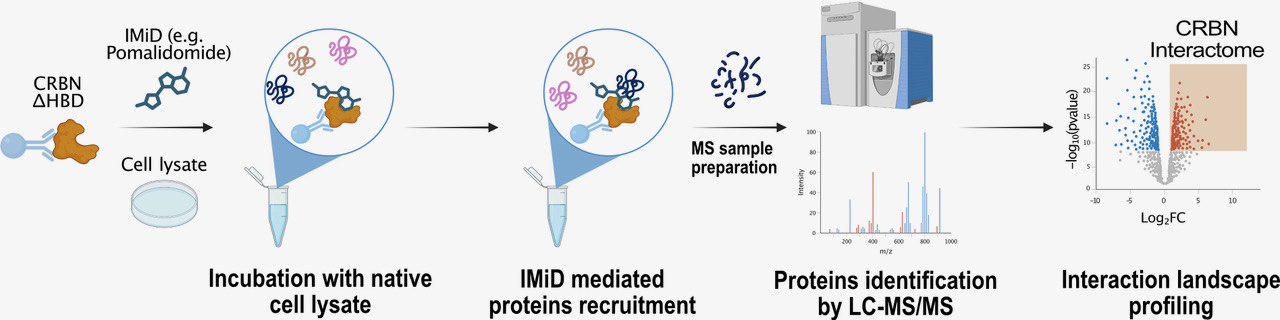
A core technology developed in our group is called ProxiCapture, a robust MS-based platform designed to identify proteins that are recruited to specific effector proteins in a proxidrug-dependent manner. Using immobilized effectors such as the E3 ligase adapter CRBN as molecular “bait”, ProxiCapture enables proteome-wide detection of proteins that are “glued” to the effector protein upon addition of proximity-inducing compounds. Conceptually, this approach functions as a ternary complex assay at proteome-scale, providing a powerful tool to map drug-induced changes in protein interaction networks.
In the context of targeted protein degraders, the ternary complexes that are formed between effector, drug, and substrate can be either productive, leading to ubiquitination and degradation, or non-productive, where binding occurs without subsequent degradation. To distinguish between these outcomes, we complement ProxiCapture with whole-cell quantitative proteomics, allowing us to monitor global proteome changes and directly assess targeted protein degradation events.
Beyond measuring protein abundance, our group employs phosphoproteomics and ubiquitin-focused proteomics to investigate how targeted protein degradation reshapes cellular signaling pathways in cells and tissues. These approaches enable us to capture the broader biological consequences of proxidrug treatment.
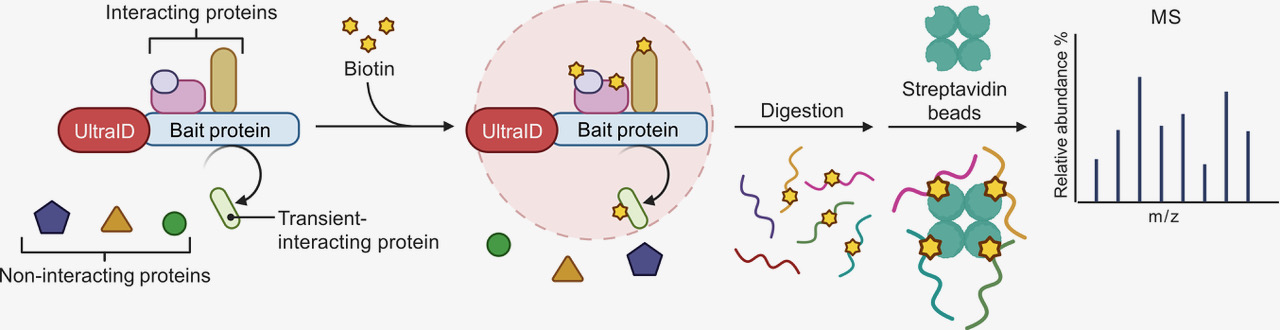
Since proximity-inducing drugs operate by rewiring protein interaction networks, we further apply proximity labeling technologies, such as UltraID, to map dynamic changes in protein-protein interaction landscapes triggered by these compounds.
Finally, our laboratory has extensive expertise in identifying direct drug-protein interactions using co-immunoprecipitation coupled with mass spectrometry. Together, these complementary strategies allow us to move from molecular interaction discovery to mechanistic insight, ultimately contributing to the rational development of next-generation proximity-based therapeutics.

Dr. Thorsten Mosler
Thorsten obtained his Ph.D. in group of Petra Beli at IMB in Mainz,Germany. His work was focused on the identification of R-loop-proximal proteins using quantitative mass spectrometry. Further, he was particularly interested in the repair of endogenous DNA lesions caused by conflicts of the transcription and the replication machineries. In spring of 2023, he joined the Dikic group as a postdoctoral fellow as a part of the quantitative proteomics team. Since 2024, he has become team leader for Proximity Proteomics and Proximity-inducing Drugs at IBC II.
Dr. Filip Hanak
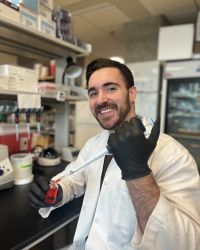
Originally from Zagreb, Croatia, Filip obtained his PhD in neuroscience at the University of Minnesota, USA. His doctoral work focused on investigating neuropeptide substrates of Angiotensin-converting enzyme using mass spectrometry, and in parallel, drug development for substance use disorders. In November 2025, Filip joined the Ðikić group as a postdoctoral fellow. His postdoctoral work is focused on ProxiDrug development using mass spectrometry proteomics.

Dr. Rubina Kazi
Rubina obtained her master’s degree in biotechnology from VSBT, Baramati, India, and completed her PhD in 2018 at NCL, Pune, India. Her PhD thesis was focused on the regulation of aging by glycation inhibitors in yeast. In 2021, she joined Prof. Ullas Kolthur’s lab at TIFR, Mumbai, India as a postdoc, where she investigated the regulation of O-GlcNAcylation by cellular and mitochondrial energetics in primary hepatocytes. She joined the Dikic lab as a postdoctoral fellow in January 2024, where she is a part of the mass spectrometry team.

Dr. Urbi Mukhopadhyay
Urbi obtained her Ph.D. degree in molecular virology in October, 2021 from Indian Council of Medical Research-National Institute of Cholera and Enteric Diseases (ICMR-NICED), Kolkata, India. Her doctoral research was focused on studying the regulation of host RNA interference machinery in context of Rotavirus infection. Urbi received EMBO long term postdoctoral fellowship to pursue her postdoctoral research and joined Dr. Sagar Bhogaraju’s group in European Molecular Biology Laboratory (EMBL), Grenoble, France in October, 2021. There Urbi started to work on E3 ubiquitin ligases, and developed a simple, cost-effective method, called UbPOD, to identify E3 ubiquitin ligase substrates in- cellulo. In August, 2024, Urbi moved to Frankfurt to join the Dikic group and here she will focus on studying E3 ubiquitin ligases involved in cytoskeleton organization.
Our team has extensive expertise in a broad range of proximity labeling strategies for mapping protein-protein interactions in living systems. Our methodological toolbox includes APEX- and UltraID-based proximity labeling approaches, which allow us to chart the interaction landscape of proteins, nucleic acids, and subcellular organelles with high spatial and temporal resolution.
Currently, we are developing and implementing novel strategies to profile the proximal proteome of proteins of interest at endogenous expression levels, thereby minimizing artifacts associated with overexpression systems. Proximity labeling technologies are particularly powerful for capturing weak, transient, or dynamic interactions that are often missed by conventional affinity purification approaches such as co-immunoprecipitation coupled to mass spectrometry (co-IP-MS).
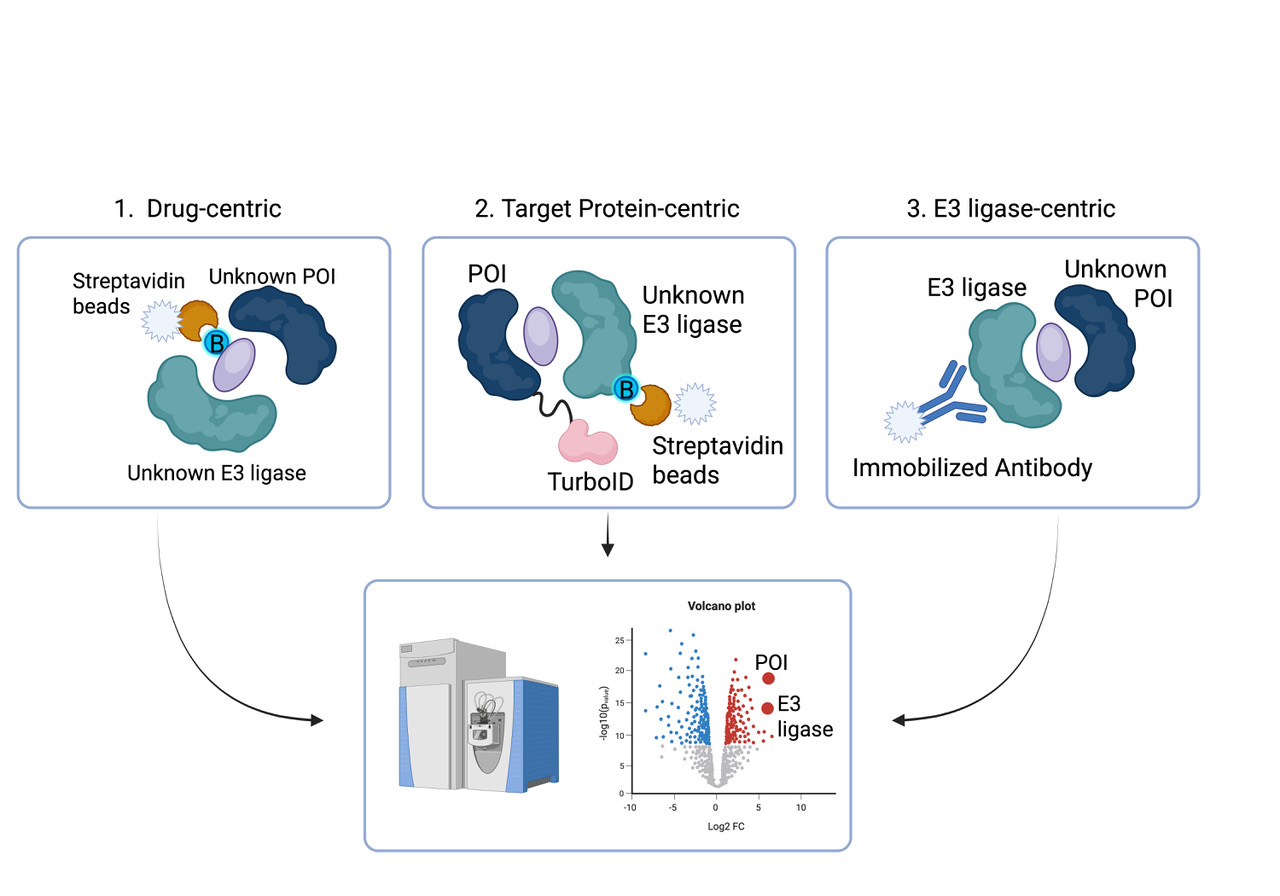
Using proximity labeling proteomics, we aim to uncover previously unknown molecular pathways and interaction networks involving specific proteins of interest. In addition, we apply these methods to investigate the mechanisms of action of proximity-inducing drugs, including molecular glues and PROTACs. In this context, our approaches enable the identification of novel E3 ligases and their potential substrates that are recruited through drug-induced proximity, thereby expanding the landscape of targetable protein degradation mechanisms.
To systematically investigate the targets and mechanisms of proximity-inducing drugs, we employ our ProxiCapture platform, which enables proteome-wide analysis of protein interactions induced by molecular glues and PROTACs. This platform allows us to identify and characterize novel molecular glue mechanisms at a proteome scale, providing insights into how these compounds reprogram protein-protein interactions to induce selective degradation.
Our initial studies focused on substrates recruited by the E3 ligase adaptor CRBN, which has served as a model system for understanding molecular glue activity. Building on this work, we are currently expanding our methodological toolbox to include additional effector proteins and E3 ligases, thereby broadening the scope of degradable targets.
Importantly, ProxiCapture is highly versatile and scalable - not only with respect to chemical diversity but also in terms of biological context. Our recent findings demonstrate that cellular context plays a critical role in determining the activity and specificity of molecular glues. Consequently, integrating different biological systems and conditions into our screening strategies is essential for discovering and understanding novel proximity-induced degradation mechanisms.