News from the Institute
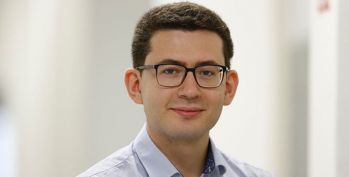
Evgenij Fiskin has been selected to receive the 2017 Bayer HealthCare Prize to honor his outstanding PhD thesis, which he completed in the Dikic lab at IBC2. The award is donated by Bayer Pharmaceuticals and bestowed by the German Society for Biochemistry and Molecular Biology (GBM) at the Mosbacher Kolloquium (www.mosbacher-kolloquium.org/).
... (read more)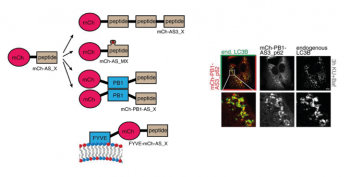
Autophagy is a cellular recycling and quality control pathway that is essential for maintaining cellular metabolism and homeostasis. Its malfunction contributes e.g. to neurodegenerative diseases and cancer.
Ubiquitin-like ATG8 proteins constitute central components of the autophagic machinery. However, until today, it is not completely clear why yeast harbors only one ATG8 protein while human cells contain six mammalian ATG8 orthologs, classified into the LC3 and GABARAP subfamilies.
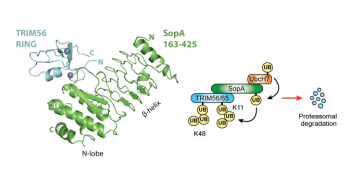
Infections with bacterial pathogens represent a global burden and are a major cause of death worldwide. For the design of new treatment paradigms it is essential to understand the intricate interplay between bacterial virulence strategies and host defense. The Dikic laboratory now added the next piece to the puzzle: They elucidated how the Salmonella effector enzyme SopA, a HECT-like E3 ligase, targets two host proteins involved in activating the immune defense (TRIM56 and TRIM65) and triggers their degradation. Atomic details of this new mechanism have now been published in Nature Communications and give a detailed insight into how Salmonella increases its own infectivity by interfering with the host immune response.
... (read more)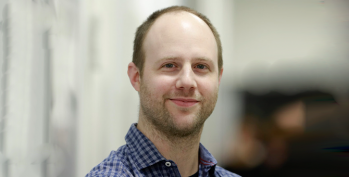
The Institute of Biochemistry II welcomes its new independent group leader Dr. Christian Münch. Dr. Münch joins the IBC II after completing his postdoctoral work at Harvard Medical School. He is an expert on protein homeostasis and quantitative mass spectrometry and will establish the Protein Quality Control group at IBC II.
... (read more)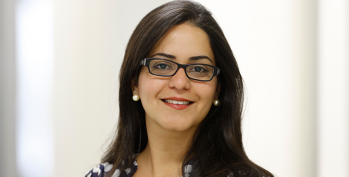
Hadir Marei, postdoctoral scientist in the group of Ivan Dikic at IBC2, was awarded a 2-year Humboldt Research Fellowship for Postdoctoral Researchers by the Alexander von Humboldt Foundation. The funded project will focus on further elucidating the regulatory interplay between intracellular signaling cascades and the autophagic pathway.
... (read more)